




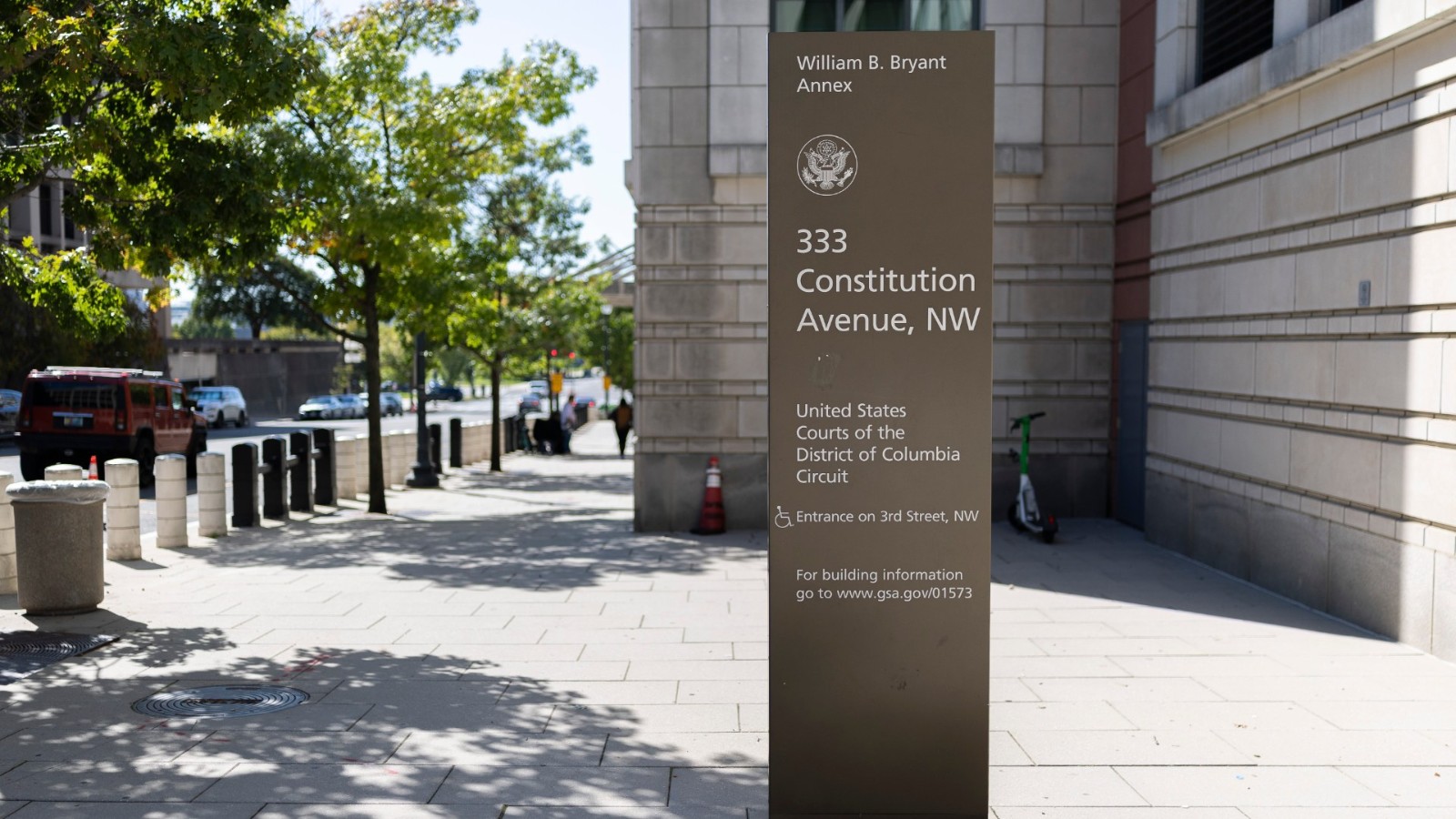
Two federal workers in the FEHB gender-affirming care lawsuit asked a judge in Washington on Wednesday, Nov. 4, for a preliminary injunction against the Office of Personnel Management’s 2027 ban on coverage for transition hormones and surgery. The motion was filed “seeking to halt the exclusionary policy from being in effect,” the Human Rights Campaign says on its case page.
The government opposes it. “Defendant’s counsel stated that Defendant opposes this Motion,” a footnote in the workers’ 51-page motion says.
U.S. District Judge Amit P. Mehta hasn’t ruled, though he set the next deadline on Thursday. “The parties shall meet and confer and, by November 6, 2026, submit a proposed schedule to complete briefing,” his minute order says, covering the injunction and a companion motion for provisional class certification.
The two workers go by Charlotte Coe and Vanessa Voe in Doe v. Kupor, the proposed class action against OPM Director Scott Kupor, where the court has let all six plaintiffs use pseudonyms. “Denying critical care to federal employees and their families simply because they are trans is a clear, targeted attack on our community,” the HRC Foundation and the law firm Correia & Puth said in a joint statement. Lawyers from Cohen Milstein Sellers & Toll also signed the motion.
“The Federal Benefits Open Season for the 2027 Plan Year will be held from November 9 through December 14, 2026,” OPM’s open season highlights say. “As Open Season for enrollment in these healthcare plans ends on December 14, a preliminary injunction is crucial to prevent imminent harm to federal employees who need continuing gender-affirming care,” the HRC release says.
FEHB’s Mid-Treatment Exception Ends in 2027 for Hormones and Surgery
“Beginning in the 2027 Plan Year, Carriers must remove any exceptions process,” OPM told insurers in its March 31 call letter, ending the case-by-case exception that let some people already in treatment keep coverage this year. Counseling survives, as Gayety reported Nov. 4. “Counseling services for possible or diagnosed gender dysphoria must still be covered,” the letter says.
OPM first set the exclusion for 2026 in an Aug. 15, 2025, letter that followed Trump’s “gender ideology” executive order. The exclusion “applies regardless of age,” that letter says.
Coe, a transgender woman who works as an IT specialist at the State Department, needs corrective surgery for what the motion calls “a painful complication” after a 2025 gender-affirming operation. “Her surgeon has recommended corrective surgery but will not operate in the absence of insurance coverage,” it says.
Voe, also a transgender woman, joined the federal workforce in August as a Defense Department researcher, and her prescribed hormone therapy costs about $2,500 a year, according to the filing. “Both Plaintiffs will have to ration their prescribed hormones,” it says. “If typically masculine features re-emerge because I don’t have access to HRT, I worry that my friends and colleagues will perceive me as a different person,” Voe said in a declaration the motion quotes.
Another plaintiff, Patrick Poe, has worked for the Postal Service for about 7.5 years and carries his transgender daughter on his PSHB plan. Paying for her care will force the family “to deplete their savings to meet her medical needs,” according to the amended complaint.
The HRC release says the exclusion reaches “at least 39,400 current and former federal employees” and their dependents, citing a Williams Institute study from July.
Title VII, Bostock and OPM’s Win at the EEOC
The workers sued under Title VII of the Civil Rights Act, the federal job discrimination law, which the Supreme Court read to protect transgender workers in Bostock v. Clayton County in 2020. Justice Neil Gorsuch wrote for the majority that “it is impossible to discriminate against a person for being homosexual or transgender without discriminating against that individual based on sex.” The complaint applies that to OPM’s insurance letters. “The Carrier Letters discriminate on the basis of sex on their face,” it says.
The Equal Employment Opportunity Commission, which is controlled by Republicans, rejected a similar challenge from transgender current and former federal workers on March 26 in Sam T. v. Kupor, Bloomberg Law reported. “The EEOC’s landmark ruling reinforces OPM’s duty to manage the FEHB Program responsibly and protect taxpayer-funded benefits for federal employees and retirees,” Shane Stevens, OPM’s associate director for healthcare and insurance, said in an agency release.
The release says the ruling affirms OPM’s authority to set coverage standards that weigh, among other things, “the biological reality of sex differences.” A federal appeals court reached a similar result for a Georgia county’s health plan in September 2025. “We took this appeal en banc to answer whether the insurance policy facially violates Title VII. We conclude that it does not,” Judge Andrew Brasher wrote for the majority of the full 11th U.S. Circuit Court of Appeals in Lange v. Houston County.
“We draw the line at blatant discrimination to deny healthcare to our nation’s dedicated civil servants,” Cathy Harris, a Correia & Puth partner and former Merit Systems Protection Board member, said when the suit was filed Aug. 3, Government Executive reported.
Judge Mehta’s Timeline in the FEHB Gender-Affirming Care Lawsuit
If the movant asks and explains the rush, “a hearing on an application for preliminary injunction shall be set by the Court no later than 21 days after its filing,” the court’s Local Civil Rule 65.1 says, unless the judge decides the motion on the papers first or finds a later date won’t prejudice either side.
CourtListener’s copy of the docket, last updated Thursday afternoon, didn’t yet show the proposed schedule, a hearing date or a written opposition as of midday Friday, and HRC’s case page points affected workers to the class lawyers. “If you have been affected by the plan changes and are seeking advice, you can contact class counsel at [email protected],” it says.
The two workers “need relief before the 2027 plan year begins on January 1, 2027, for PSHB beneficiaries and January 10, 2027, for FEHB beneficiaries,” their motion says.


