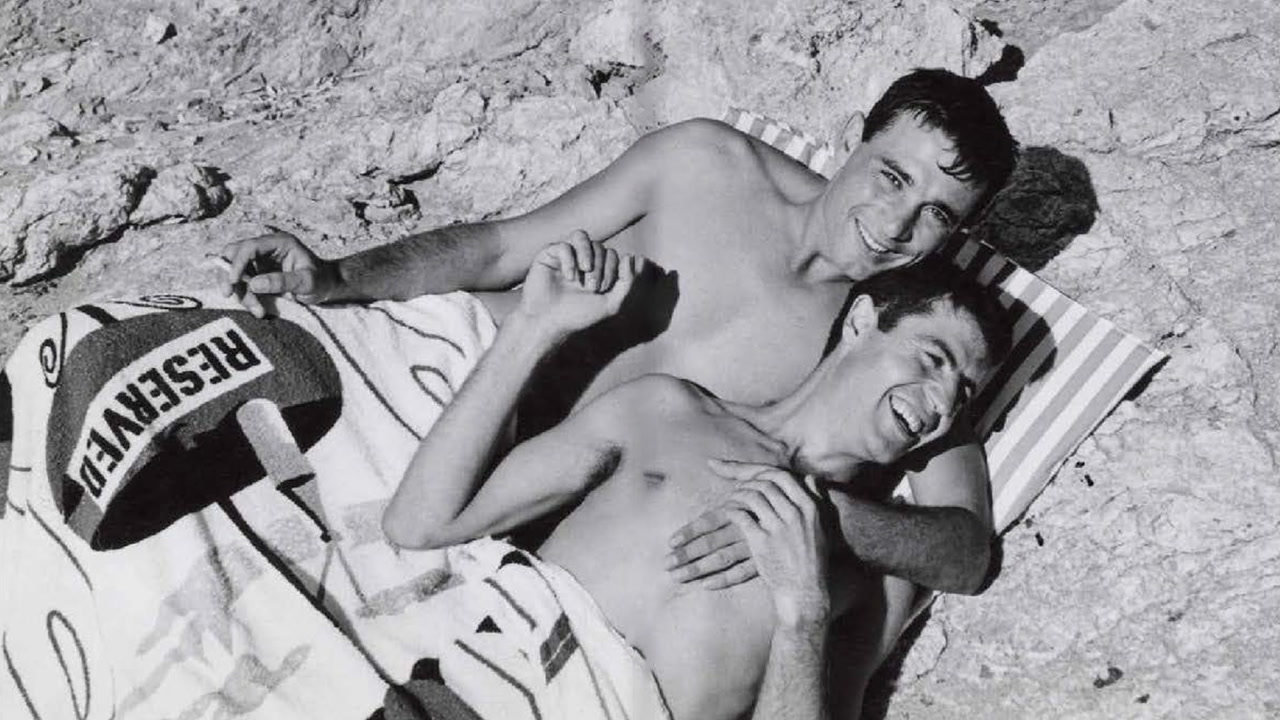

Hugh Nini and Neal Treadwell never set out to become accidental archivists. Their first discovery was a flea-market snapshot from 1920s Texas: two men in Sunday suits, foreheads touching, a handwritten caption reading “Yours forever.” The intimacy felt unmistakable. They framed it, then found another, and another, until a curiosity turned into “Loving: A Photographic History of Men in Love, 1850s-1950s,” a 336-page time capsule quietly rewriting what we think we know about queer history.
In this interview the Dallas-based partners explain their self-taught detective work. They look for “tells”—hands slipped into pockets together, matching rings, body language so relaxed it borders on domestic. Whenever possible, they cross-reference studio backdrops with census records, railway timetables, even hat-band styles to pin down a decade and locale. “The photos chose us,” Neal jokes. “We just promised to get them home.”
Collecting meant decoding euphemisms. A tiny tintype etched with the phrase special friend signaled romance in 1890; a seaside postcard stamped pals often masked passion when mailed through Victorian postal censors. Hugh describes one favorite: two World War I soldiers in uniform, kissing behind a barracks wall. “History books paint that era in stark black and white,” he says, “but here was proof of tenderness blooming between the trenches.”
Since publishing Loving, the pair have fielded thousands of emails from families who found similar images in attic boxes, plus researchers eager to integrate the photos into museum exhibits. They’re cataloguing submissions for a second volume focused on the 1960s—an era when Polaroids replaced studio portraits and stolen moments moved from parlors to parade routes.
Asked what keeps them hunting through dusty bins at estate sales, Hugh pauses. “Every new photo widens the frame of visibility,” he says. “For someone today, seeing two men in 1905 holding hands means realizing love like theirs has always existed—legal or not, seen or unseen.” Their work is less nostalgia, more quiet revolution: proof that queer affection isn’t a modern invention but a timeless, stubborn fact.