



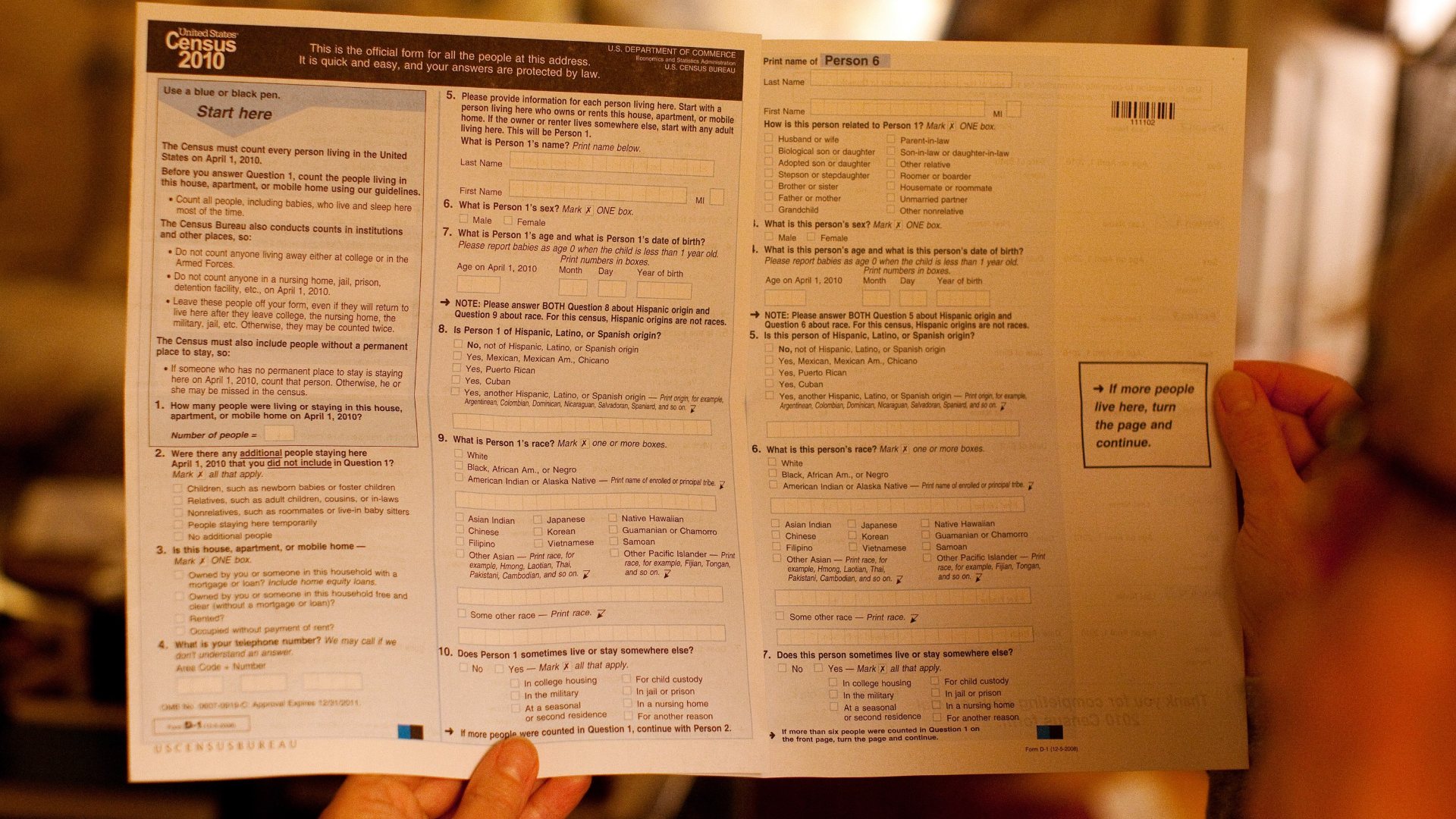
Public comment closed Monday, Nov. 2, on a Commerce Department plan to keep any 2030 census sexual orientation question off the forms used for the count, which have never asked one. “No question about race, ethnicity, or sexual orientation shall appear on the short form decennial census questionnaire or any questionnaire used for the enumeration of the population,” the proposed rule says.
The notice never mentions gender identity or same-sex couples, and it leaves the American Community Survey alone. “While the Census doesn’t ask questions about sexual orientation or gender identity, it’s still vital for us to be counted,” Meghan Maury, then policy director of the National LGBTQ Task Force, said in 2020.
Same-sex couples have shown up another way. “The 2020 Census provided data about same-sex married and cohabiting couples,” the Williams Institute at UCLA School of Law told the Census Bureau in a 2022 public comment.
Will the 2030 Census Ask About Sexual Orientation?
Commerce Secretary Howard Lutnick signed the proposal Sept. 8, and it cites “the (potentially) sensitive nature of questions about race, ethnicity, and sexual orientation” as one reason for the ban. “Excluding such questions from the decennial census in this manner would reduce response burden as well as the risk of disclosure,” the notice says.
Its summary argues census data shouldn’t be “distorted in any way by questions about immaterial personal characteristics, such as race.” Commerce later pushed the comment deadline from Oct. 13 to Nov. 2 in an Oct. 5 notice, and the full proposal drew more than 143,000 comments, Inside Higher Ed reported.
“Questions about biological sex, date of birth, and household relationships may be included,” the rule says. The 2020 form was the first with separate “opposite-sex” and “same-sex” categories for spouses and unmarried partners, Pew Research Center reported in 2018, and Lutnick’s notice doesn’t say whether that choice survives.
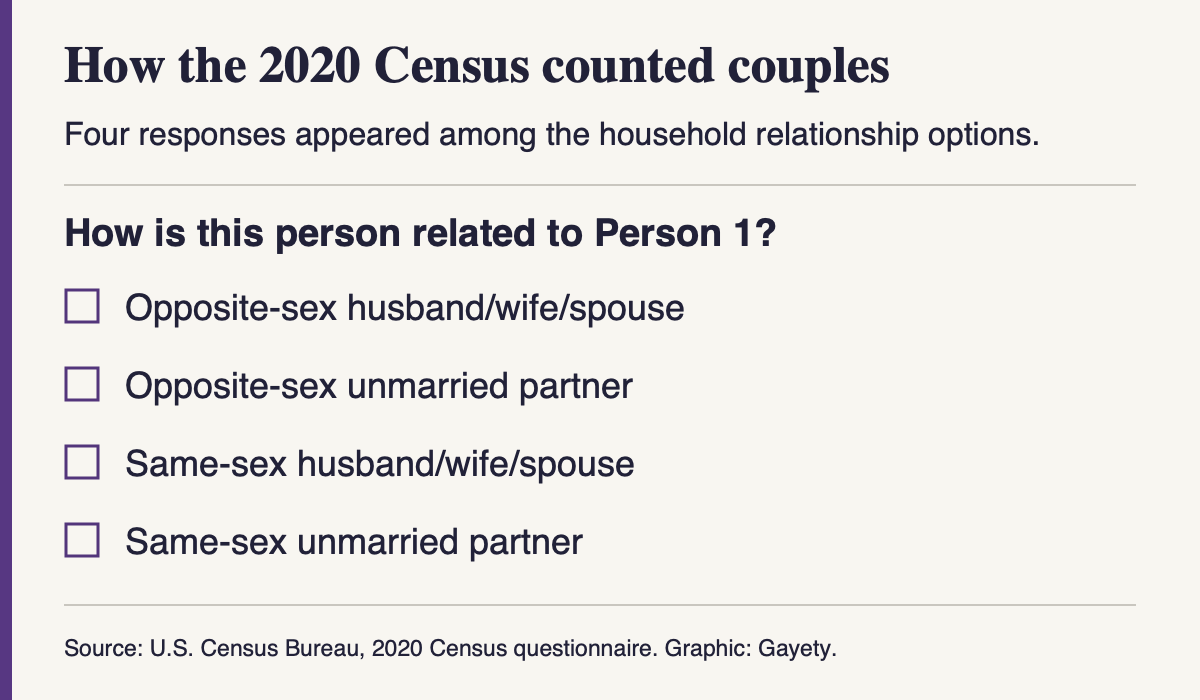
The notice says the Bureau is “not proposing any restrictions on its ability to ask demographic questions on the American Community Survey.”
(Over at HHS, Robert F. Kennedy Jr.’s department finalized a separate rule on gender dysphoria Oct. 30.)
LGBTQ+ Data the Census Bureau Has Already Cut
Caroline Medina, senior adviser for data policy at the Movement Advancement Project, wrote in March that the Bureau “halted its research to assess the feasibility of adding gender identity measures to the American Community Survey.” “Gender identity measures were removed from the relaunched version of the Household Pulse Survey,” Medina wrote for The Census Project.
The Human Rights Campaign Foundation used Pulse responses from 2021 to 2024 for an analysis released in August estimating that 25.6 million U.S. adults are LGBTQ+. “We’re not a niche constituency, and no campaign, brand, or employer can afford to treat us like one,” HRC President Kelley Robinson said in the announcement. (Gallup’s May survey found support for same-sex marriage slipping, Gayety reported in June.)
“Reliable data are essential for understanding who lives in this country and what our communities need to thrive,” said Tari Hanneman, the foundation’s senior director of research and education, in the same release.
LGBTQ+ business owners lost a data source, too. On the Bureau’s Annual Business Survey, Medina wrote, the cut “eliminates the only nationally representative federal data source on LGBTQ-owned employer businesses.”
“Since January 20, 2025, approximately 360 federal data collections have removed a sexual orientation or gender identity measure,” Lauren Bouton and Elana Redfield of the Williams Institute wrote in a February report. Same-sex couple questions made it through that stretch. “None of the collections that asked about same-sex partnership status removed those questions,” they wrote.
Funders and Attorneys General Push Back on Lutnick’s Plan
Thirty-nine funders, including The California Endowment and The James Irvine Foundation, signed a comment against the plan, the endowment said Nov. 2. Its post says the proposal “would prohibit collection of important data on race, ethnicity and sexual orientation.”
“Other Census Bureau sources are unlikely to replace the geographic reach of the census, creating a need to fund research for local demographic estimates,” the Council on Foundations told philanthropies in a comment guide.
Attorneys general from 23 states and Washington, D.C., joined by the governors of Kentucky and Pennsylvania, filed their own objection Nov. 2. They noted that sexual orientation and gender identity questions on the Pulse survey, starting in 2021, “enabled the Bureau to shed light on inequities” that LGBTQ+ people face in housing, jobs and health.
The rule is still a proposal. It would also exclude undocumented immigrants and many other noncitizens without permanent resident status, from the population base used to divide House seats. “The census is supposed to count everyone,” Chioma Chukwu, executive director of the nonprofit American Oversight, said in a statement quoted by Inside Higher Ed.


