




Five of 2,913 people who got at least one Apretude shot to prevent HIV later showed signs of HIV in their insurance claims, according to ViiV Healthcare researchers presenting at AMCP Nexus, the managed care pharmacy meeting held Oct. 26 to 29 in San Diego. ViiV makes Apretude and paid for the work.
Two of the five had stopped the shots months before they tested positive, The American Journal of Managed Care reported Oct. 28. A second poster found people who started on the shot were likelier than pill users to keep steady PrEP coverage through their first year, 40% versus 26%.
The shot “may allow more individuals to maintain sustained high adherence,” the authors wrote in the meeting’s abstract supplement. That adherence abstract underwent peer review; the HIV testing report was listed separately as an encore presentation. These conference findings are not full research papers.
The researchers looked back at insurance records rather than randomly assigning people to shots or pills. Their HIV case definition combined a diagnosis code with at least 60 days of antiretroviral treatment. Claims can miss tests that are not billed to an insurer, and these numbers alone do not establish how well the drug prevents HIV or why someone acquired it.
Apretude contains cabotegravir and is given every two months after the first two injections. It is a different medicine from Yeztugo, the twice-yearly lenacapavir injection discussed below.
Insurance Can Block Access to PrEP Shots
Access remains a problem. A study at one St. Louis clinic, presented at IDWeek in October, found 4 in 10 patients prescribed injectable PrEP never got one, mostly because of insurance.
“I think this really illustrates that the demand is there for LAI PrEP, but very much the real-world implementation of LAI PrEP is not set up to meet that demand at this time,” Dr. Aditi Ramakrishnan, who led that study, told AJMC.
Doctors told Reuters the same thing back in May. Dr. Rachel Presti of Washington University’s HIV clinic in St. Louis said there’s “a lot of interest in Yeztugo,” Gilead’s twice-a-year shot. But “if your insurance doesn’t cover a pharmacy benefit, we can’t give it,” she said, Reuters reported.
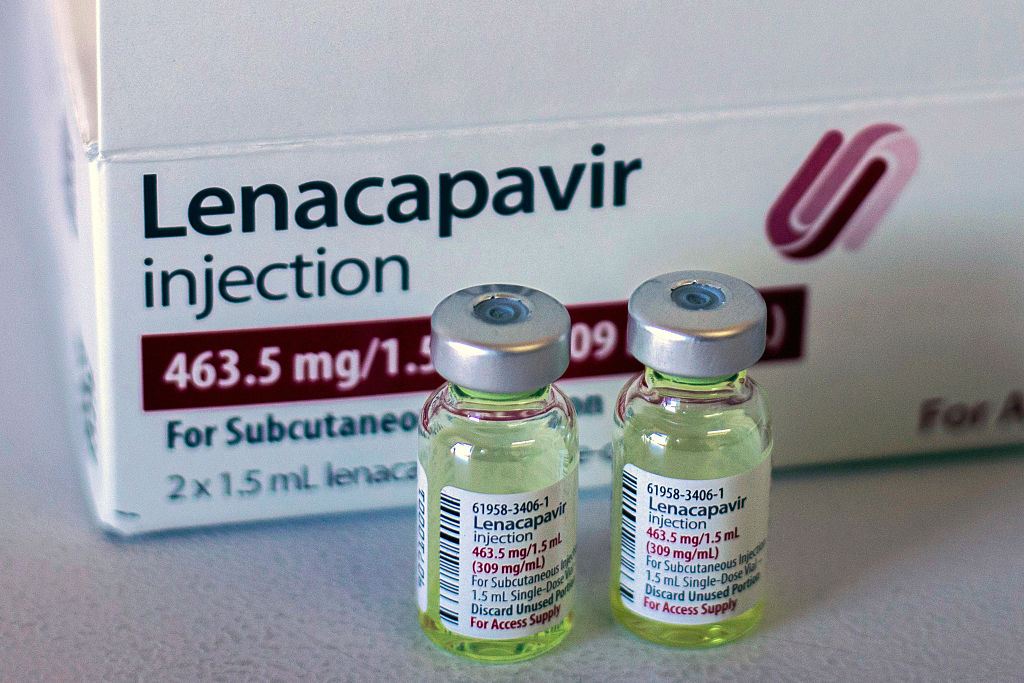
Tristan Schukraft, CEO of the PrEP telehealth company MISTR, told Reuters in May that his company was holding off on Yeztugo. “The last thing we want to do is introduce Yeztugo and then have 9 out of 10 people get rejected for it based on insurance,” he said.
Daily PrEP Pills Remain Widely Used
IQVIA counted about 461,000 Descovy prescriptions in the first quarter of 2026, against roughly 32,000 for Apretude and over 9,000 for Yeztugo, Reuters reported in May. Those are prescription counts, not counts of individual patients, and the medicines have different dosing schedules.
“We have close to 75 people who are on Yeztugo right now, which is not as many as we expected or hoped,” Dr. Barry Zingman, medical director of the Montefiore AIDS Center in New York, told Reuters in May. “Many people just don’t want something in their body for weeks or months on end.”
“For a fair number of people that fits their lifestyle and their risk profile better,” Zingman said of the daily pills.
Among HIV-negative gay and bisexual men surveyed in 19 U.S. cities in 2023, 45% said they used PrEP, the CDC found.


