



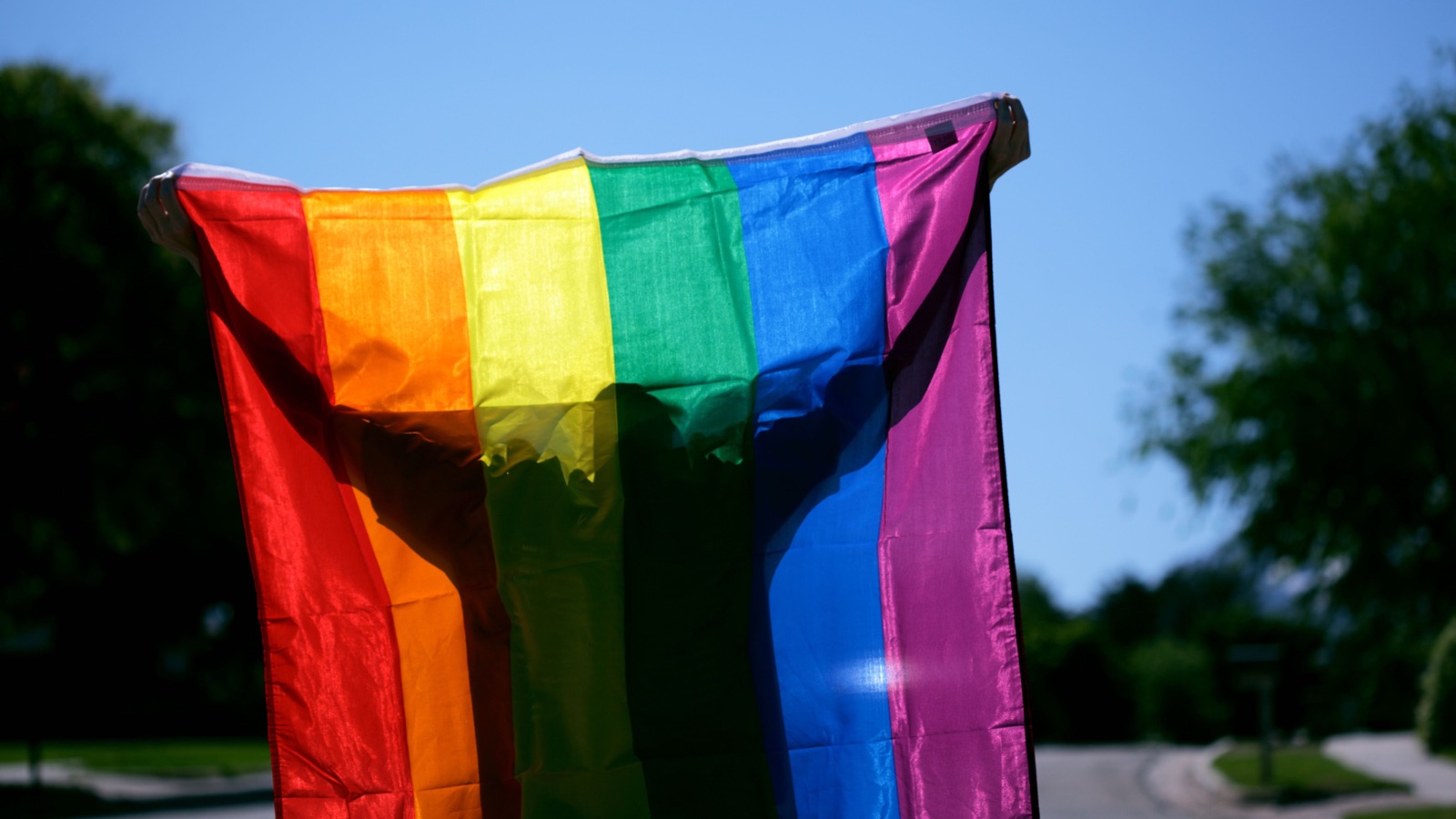
In 1892, Oscar Wilde asked friends to wear green carnations to the opening of Lady Windermere’s Fan. The flower became tied to his circle, though historians still debate what he meant by it. That uncertainty runs through the history of queer symbols. A flower might be an invitation, a badge might be a protest, and the same object could mean something different a generation later.
Gay symbols are objects, colors, phrases and images that LGBTQ+ people have used to recognize one another or express solidarity. Some offered discretion when same-sex intimacy was criminalized. Others were deliberately public. The green carnation, violets, “friend of Dorothy,” pink triangle, lambda and labrys carry different histories, and none can tell you a stranger’s identity on its own.
Gay Symbols at a Glance: Meanings and Dates
| Symbol | Who used it | Era | What it signaled | Status |
|---|---|---|---|---|
| Green carnation | Oscar Wilde’s circle | 1890s London | Membership in Wilde’s aesthetic, queer-adjacent set | Documented, meaning debated |
| Violets | Lesbian and bisexual women | Sappho’s poetry; later modern symbolism | Love between women | Documented |
| Red necktie | Gay men in New York | 1890s to 1940s | “I’m one of you” | Documented (Chauncey) |
| “Friend of Dorothy” | Gay men | Mid-20th century on | Coded way to say “gay” | Documented, origin contested |
| Polari | Gay men in Britain | 1920s to 1960s | Spoken secret slang | Documented |
| Pink triangle | Gay men (Nazi badge), then the movement | 1930s; reclaimed 1970s and 1987 | Persecution, then defiance | Documented |
| Black triangle | People labeled “asocial” by the Nazis; later some lesbian activists | 1930s; reclaimed later | A broad prisoner classification, not a specific lesbian badge | Documented |
| Lavender | LGBTQ+ people broadly | Early 20th century onward | Queer association, later a color of protest | Documented |
| Lambda (λ) | Gay Activists Alliance, then global | 1970 on | Liberation and change | Documented |
| Labrys | Lesbian feminists | 1970s on | Strength, self-sufficiency | Documented |
| Handkerchiefs | Gay and bi men, leather scene | 1970s on | Sexual interests | Documented, origins disputed |
| Pinky ring, single earring | Gay men (reportedly) | 20th century | Orientation | Folklore, unverified |
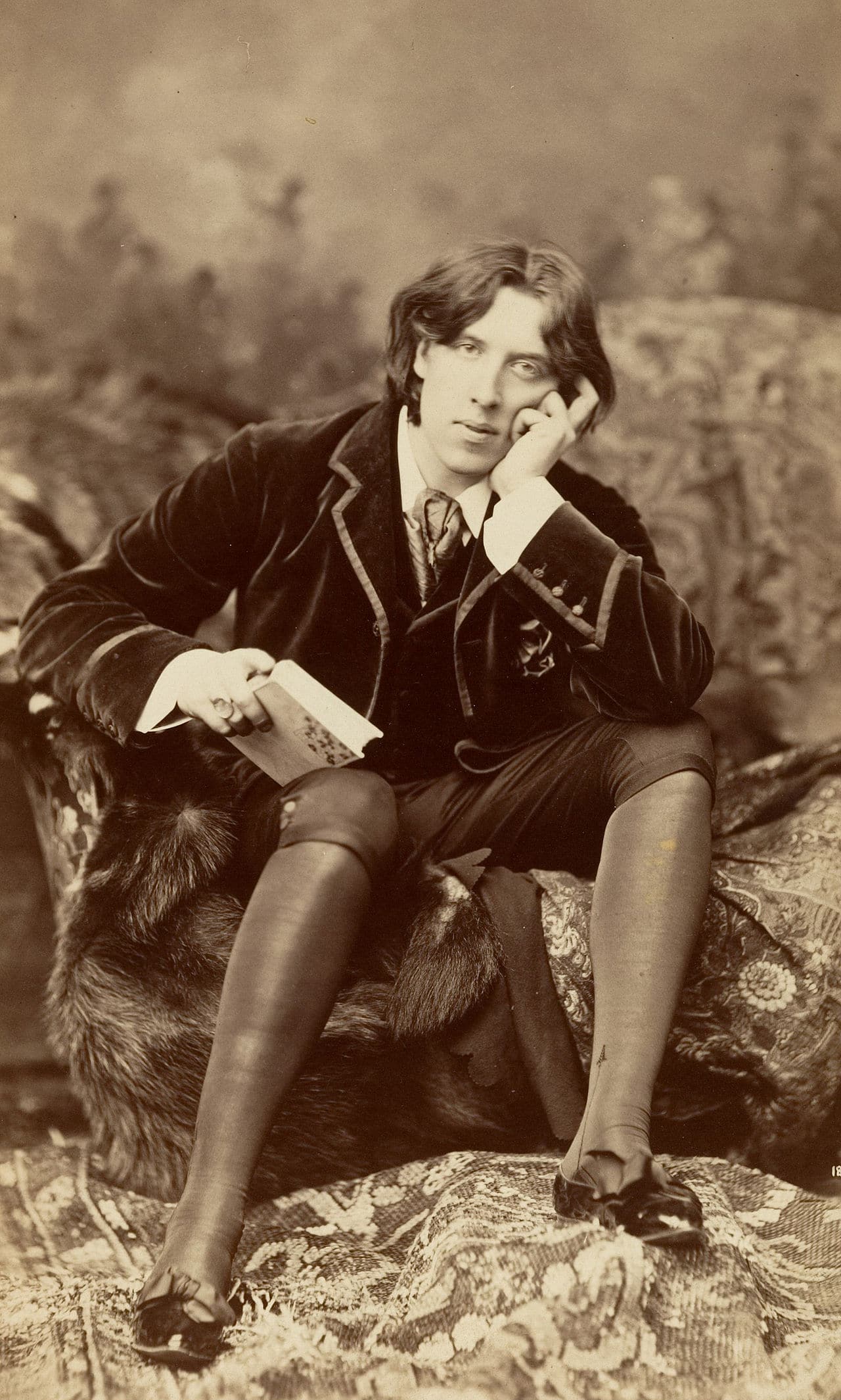
The Green Carnation and Oscar Wilde’s Circle
The Cambridge University Library records Wilde’s request to artist Graham Robertson to wear a green carnation at the 1892 opening. The flower became associated with Wilde and his friends. The library also cautions that its meaning remains debated. It is safer to describe that association than to treat every green carnation as a fixed Victorian code for gay men.
The connection was recognizable enough to become a book title. Robert Hichens published The Green Carnation anonymously in 1894; the Morgan Library’s copy records that publication. Stories about Wilde’s exact explanation for the flower, or a pre-existing Parisian code, need more evidence than their frequent repetition supplies.
Violets and Lavender: Sappho, ‘La Prisonnière’ and the Lavender Scare
Violets
Sappho’s surviving poetry includes women wearing garlands of flowers, among them violets. The University of Washington Botanic Gardens traces the flower’s later association with love between women to those poems. That is a history of literary influence, not proof that ancient lesbians used a universal floral signal.
Violets also appear in Édouard Bourdet’s La Prisonnière, known in English as The Captive. Its 1926 Broadway production made a bouquet a sign of desire between women. The Royal Horticultural Society recounts the controversy and supporters wearing violets on their lapels. The play gave the association a public life beyond readers of Sappho.
Lavender
Lavender had queer associations before the 1950s, but the Lavender Scare gave the color a new political weight. President Dwight D. Eisenhower signed Executive Order 10450 on April 27, 1953, helping entrench the exclusion of gay people from federal work. The National Archives describes thousands of jobs lost across the broader purge; there is no single settled total.
On May 1, 1970, lesbian activists wore “Lavender Menace” T-shirts to disrupt the Second Congress to Unite Women in New York. They were challenging their exclusion from the women’s movement, as the NYC LGBTQ Historic Sites Project documents. The shirts reclaimed a phrase associated with NOW president Betty Friedan’s objections to lesbian visibility.
Red Neckties and Coded Clothing in Gay New York
Historian George Chauncey’s Gay New York (1994) reconstructed gay life in the city from 1890 to 1940 using police records, diaries and newspapers. One finding: effeminate gay men known as “fairies” often wore distinctive items such as red ties or brightly colored suits, which signaled their identity to other men, per a Milestone Films essay on the book.
A red tie could be ordinary clothing or a deliberate signal. The context mattered: who wore it, where, and with what other gestures or styles. Reading that history is different from assigning an orientation to someone wearing a red tie today.
Friend of Dorothy Meaning: Origin of the Gay Code Phrase
“Friend of Dorothy” is a coded way of saying a man is gay. Asking “Is he a friend of Dorothy?” let gay men check someone’s orientation without saying the word out loud. The phrase is most often traced to Dorothy in The Wizard of Oz, played by Judy Garland in the 1939 film, though other origins are proposed.
Where ‘Friend of Dorothy’ Came From
The dictionary trail is less tidy than the familiar story. Grammarphobia’s account of the Oxford English Dictionary connects Dorothy to L. Frank Baum’s heroine and Judy Garland’s performance. But its 1972 citation is for “Dorothy and Toto,” a related expression. The examples it gives for “Dorothy’s friends” and “friends of Dorothy” are later. Those dates document appearances in print; they do not establish when people first said the phrase.
Dorothy Parker is another proposed namesake, but there is no settled origin story. Garland’s importance to gay audiences helps explain the appeal of the Oz connection.
Polari and the Hanky Code: Spoken and Worn Signals
Some codes were spoken. In Britain, gay men used Polari, a slang built from Italian, Romani, Yiddish, backslang and fairground talk, so they could gossip in public while sex between men was a crime. Others were worn. The hanky code of the 1970s used bandana colors and back-pocket placement to signal sexual interests, a system that grew up in gay leather culture and had no single authoritative version.
Polari let people talk around an unknowing audience; hankies could send a message without a word. Neither code was universal, and the same signal could mean different things to different people.
The Pink Triangle: From Nazi Badge to ACT UP Protest
The pink triangle began as a badge imposed on men imprisoned in Nazi concentration camps as “homosexual” offenders. The United States Holocaust Memorial Museum estimates 5,000 to 15,000 men were held in that category. Nazi persecution also included about 100,000 arrests under Paragraph 175, roughly half resulting in convictions. Those figures describe different stages of persecution, not interchangeable totals.
After 1945, West Germany continued enforcing the Nazi-era version of Paragraph 175 until reforms in 1969. The law remained in modified form until its repeal in 1994. The museum’s history of Paragraph 175 explains why liberation from a camp did not end the legal persecution of survivors.
How the Pink Triangle Was Reclaimed
Gay activists reclaimed the pink triangle in the 1970s. In 1987, the Silence = Death collective put an upward-pointing triangle on its now-famous poster. ACT UP adopted the image that year. The NYC LGBTQ Historic Sites Project preserves the distinction between the collective that made the poster and the organization that helped make it a worldwide emblem of AIDS activism.
The Black Triangle
The black triangle identified prisoners the Nazis classified as “asocial.” It was not a badge specifically for lesbians. The Holocaust Memorial Museum explains that some lesbians were imprisoned under that classification, as political prisoners or as members of other targeted groups. Paragraph 175 applied to men. Later lesbian reclamation of the triangle should not be mistaken for a uniform Nazi policy toward lesbians.
Lambda Symbol Meaning: The Gay Activists Alliance, 1970
New York’s Gay Activists Alliance adopted the lowercase Greek lambda (λ) in 1970, with the choice credited to designer Tom Doerr. Accounts of his reasoning differ. The National Park Service records explanations involving energy and change, alongside the simpler story that Doerr liked the letter’s appearance. No single scientific meaning needs to be treated as the definitive explanation.
The People’s History Museum records the International Gay Rights Congress in Edinburgh recognizing lambda as a symbol of lesbian and gay activism in December 1974. The letter remains familiar through organizations such as Lambda Legal and Lambda Literary.
The Labrys: A Double Axe for Lesbian Feminists
The labrys is a double-headed axe associated with ancient Minoan imagery and, in later interpretations, mythical women warriors. Lesbian and feminist groups adopted it in the 1970s. A labrys earring in the London Museum’s collection shows how that symbolism could be worn. Interlocking Venus signs offered another recognizable image of love between women.
The Purple Hand and a San Francisco Protest
On Oct. 31, 1969, gay liberation activists protested the San Francisco Examiner over its coverage. Ink was dumped onto the demonstrators from the newspaper’s building, and protesters pressed purple handprints onto its exterior. UC Berkeley’s archive project presents contemporary accounts of the confrontation. The handprints became an image of resistance associated with that protest.
Pinky Rings, Single Earrings and ‘Is He Musical?’: Folklore Codes
Pinky rings, a single earring and phrases such as “Is he musical?” appear in recollections of gay social codes. Their reported meanings vary by place, generation and storyteller. They do not form a reliable checklist for identifying someone’s sexuality, and this guide does not assign them a universal origin or rule.
Even the earring story changes ears depending on who is telling it. These accounts can be part of queer memory without becoming a test you apply to strangers. Ask what a symbol means to the person wearing it, if the setting makes that conversation welcome.
Queer Symbol FAQ: Dorothy, Triangles, Carnations and Lambda
What does ‘friend of Dorothy’ mean?
“Friend of Dorothy” is a discreet way to refer to a gay man. Judy Garland’s Dorothy in The Wizard of Oz is the best-known explanation, though other namesakes have been proposed. A 1972 dictionary citation concerns the related phrase “Dorothy and Toto,” not a proven first use of “friend of Dorothy.”
Why is the pink triangle a gay symbol?
The Nazis used pink triangles to mark men held in concentration camps as “homosexual” prisoners. Gay activists later reclaimed the image. The Silence = Death collective used an upward-pointing triangle in its 1987 poster, which ACT UP adopted that year.
What did the green carnation mean?
Wilde asked friends to wear green carnations at the 1892 opening of Lady Windermere’s Fan. The flower became linked to his circle and later to gay men more broadly. Historians still debate its precise original meaning.
What does the lambda symbol mean in LGBTQ history?
The Gay Activists Alliance adopted lambda in 1970, with the choice credited to Tom Doerr. Explanations for the choice vary. The 1974 International Gay Rights Congress in Edinburgh helped establish it as a broader symbol of lesbian and gay activism.
What symbols did lesbians use historically?
Violets, the labrys and interlocking Venus signs have all represented love between women or lesbian pride. Some activists also reclaimed the black triangle. It was a broad Nazi prisoner classification, not a badge specifically assigned to lesbians.

