




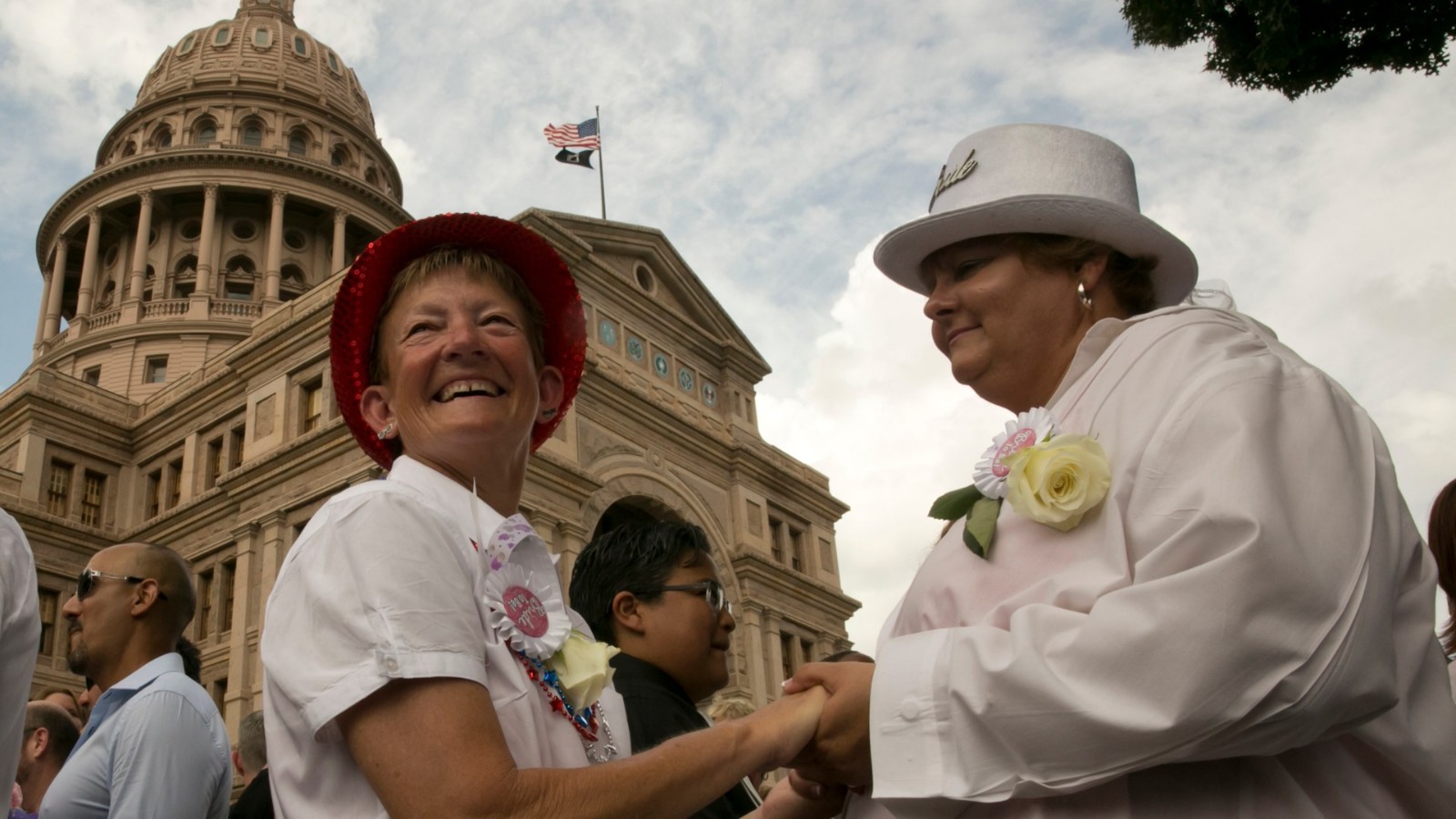
Maggie Ellis, the Democrat elected chief justice of the Texas Supreme Court on Tuesday, Nov. 3, wants the court to rewrite the rule that lets Texas judges turn down same-sex weddings on religious grounds. Judges who officiate should follow one standard, she told The Dallas Morning News: “either you perform all marriages, or none.”
“It’s really the wrong direction for our Supreme Court,” Ellis said of the court’s order. “It’s back-door discrimination.”
KXAN reported her win, citing The Associated Press. She beat Republican Chief Justice Jimmy Blacklock, The Texas Tribune reported, in the same Democratic wave that saw Gina Hinojosa unseat Gov. Greg Abbott. “It’s significant that I would be the first openly queer female justice in the entire state of Texas,” she told The Daily Texan in 2024, after she won her seat on Austin’s 3rd Court of Appeals.
Her campaign now bills her as the first openly LGBTQ+ person elected statewide in Texas, one of several queer candidates who won Tuesday. “There are so many statewide officials who come before me who were not able to be open,” Ellis told KXAN.
Why Maggie Ellis Ran Against the Court’s Wedding Rule
Her objection is older than her win. In a 2025 candidate questionnaire for Stonewall Democrats of Austin, Ellis called the court’s order “an attack on our community and our Constitution,” KPRC 2 reported. She wrote that she then decided to run for a seat on that court.
She told KXAN that the way the rule is phrased, “it extends to almost anybody,” and she named interracial couples as one example. “It’s essentially a government actor saying, I am open for business unless you are X, Y, and Z,” she said.
“I think there’s no place for that in our state, and certainly not in our courts,” Ellis told the station.
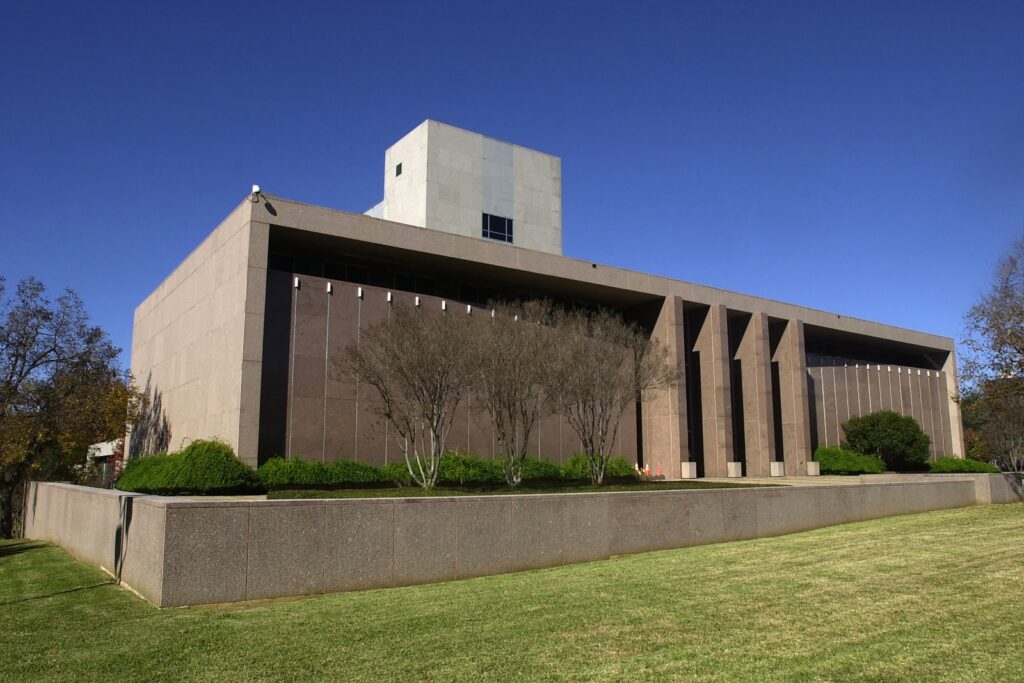
The Oct. 24 Comment and Dianne Hensley’s $640,000 Win
McLennan County Justice of the Peace Dianne Hensley started marrying only opposite-sex couples in 2016, and the State Commission on Judicial Conduct publicly warned her in 2019, KERA News reported. The Supreme Court let her religious freedom suit go forward in 2024. “Judge Hensley went back to work, her Christian conscience clean, her knees bent only to her God. Sounds like a win-win,” Blacklock wrote in a concurrence.
The rule Ellis is targeting is one sentence long, added to Canon 4 of the Texas Code of Judicial Conduct on Oct. 24, 2025, and effective immediately, the order shows. “It is not a violation of these canons for a judge to publicly refrain from performing a wedding ceremony based upon a sincerely held religious belief,” it reads. Blacklock’s name sits first among the eight justices listed on the order, which Gayety covered when it landed.
On Jan. 9, the court answered the 5th U.S. Circuit Court of Appeals, which had asked in Jack County Judge Brian Umphress’ lawsuit whether Canon 4A(1) bars judges “from publicly refusing, for moral or religious reasons, to perform same-sex weddings” while still doing opposite-sex ones. “Accordingly, the answer to the certified question is no,” the unsigned opinion says.
In June, Travis County District Judge Maya Guerra Gamble ordered the commission to pay Hensley $10,000 in damages and $630,000 in attorney’s fees, court costs and expenses, the final judgment shows. It bars the commission from investigating, sanctioning or disciplining her over those refusals “regardless of whether Judge Hensley continues to perform marriages for opposite-sex couples.”
First Liberty Vows to Defend Texas Judges Who Refuse
First Liberty Institute, the Plano legal group that represented Hensley, answered Ellis on Friday. “It’s sad that an incoming Justice’s first public statement is one against religious freedom,” said Kelly Shackelford, its president, CEO and chief counsel, KWTX reported. “We’ve won in litigation on this very issue.”
He also said, “The new Chief Justice is off to a regrettable start,” according to KPRC 2. Shackelford added that “First Liberty stands ready to defend any judge affected by this policy,” KWTX reported.
Hensley told the Waco station that Ellis’ plan “sounds unconstitutional and tacky to me.”
Jason Mazzone, a University of Illinois law professor, predicted last year that defenders of the comment would say other officiants can always marry the couples a judge turns away. “But that, of course, is not how equal protection works, and it’s not how we expect government officials to operate,” he told KERA News.
Ellis Joins a Republican-Majority Texas Supreme Court in January
Ellis can’t rewrite the comment by herself, KPRC 2 noted, since changing the code takes action by the court. “We are better served by having balance on the court,” she told KXAN.
Republicans will keep their majority on the nine-member court, the Tribune reported. In the KXAN interview, Ellis praised Republicans on the court as “wonderful jurists.” She’ll be sworn in as chief justice in January, the station reported.

